Apa itu DeFi? Panduan Lengkap DeFi dengan Perbandingan TradFi dan Tutorial TokenPocket
Apa itu DeFi?
Bayangkan sebuah dunia di mana Anda dapat meminjamkan, berdagang, dan mendapatkan bunga kapan saja, di mana saja, tanpa bank atau dokumen yang membosankan. Ini DeFi—kependekan dari Keuangan Terdesentralisasi.
Apa itu DeFi? DeFi adalah ekosistem keuangan terbuka yang dibangun di atas blockchain publik, menggunakan kontrak pintar untuk mengaktifkan layanan peer-to-peer (P2P). Melalui platform seperti TokenPocket, pengguna dapat beroperasi secara langsung dengan dompet terdesentralisasi dan mempertahankan kendali penuh atas aset mereka. Pada awal tahun 2026, nilai total yang dikunci (TVL) dalam protokol DeFi tetap mengesankan, mencerminkan pertumbuhan dan kematangan yang stabil. DeFi menggabungkan transparansi dan inovasi, hidup berdampingan secara berdampingan TradFi (keuangan tradisional).
Bagian 1: Definisi DeFi
DeFi adalah sistem keuangan berbasis blockchain yang menghilangkan perantara tradisional. Ini bergantung pada kontrak pintar — kode otomatis yang menjalankan aturan untuk peminjaman, perdagangan, dan banyak lagi.
Elemen inti mencakup blockchain publik (misalnya, Ethereum, BNB Chain), kontrak pintar, dApps (aplikasi terdesentralisasi), dan dompet non-penahanan. Pengguna menyimpan kunci pribadinya dan menikmati akses global tanpa izin.
DeFi bertujuan untuk membangun infrastruktur keuangan yang lebih inklusif, transparan, dan tanpa batas bagi siapa pun yang memiliki koneksi internet.
Bagian 2: Bagaimana Cara Kerja DeFi?
DeFi mengikuti berlapis Tumpukan DeFi:
- Lapisan Penyelesaian: Blockchain yang mencatat transaksi.
- Lapisan Protokol: Kontrak pintar yang mendefinisikan aturan.
- Lapisan Aplikasi: dApps yang menghadap pengguna.
- Lapisan Aset: Token dan stablecoin.
Fitur utamanya adalah kemampuan komposisi — protokol bekerja sama seperti balok Lego. Misalnya, tukar token pada DEX dan langsung setorkan ke protokol peminjaman untuk mendapatkan hasil.
Contoh sederhana: Setor USDC ke dalam protokol peminjaman. Kontrak pintar mencocokkan pemberi pinjaman dengan peminjam, dan Anda memperoleh bunga secara otomatis. Semua aktivitas transparan dan berjalan 24/7 dengan biaya kompetitif dalam banyak kasus.
Bagian 3: Perbedaan Utama Antara DeFi dan TradFi
TradFi (Keuangan Tradisional) mengacu pada lembaga keuangan tradisional seperti bank, perusahaan pialang, dan bursa teregulasi.
DeFi (Keuangan Terdesentralisasi) menekankan kedaulatan pengguna, transparansi, dan keterbukaan. Keuntungan intinya mencakup partisipasi tanpa izin, transparansi on-chain, pengurangan perantara untuk efisiensi yang lebih tinggi, hak asuh penuh atas aset, dan inovasi cepat yang dimungkinkan oleh kemampuan komposisi.
| Dimensi | DeFi (Keuangan Terdesentralisasi) | TradFi (Keuangan Tradisional) |
|---|---|---|
| Penitipan Aset | Non-penahanan: Pengguna memegang kunci pribadi mereka sendiri dan mengontrol sepenuhnya aset | Kustodian: Lembaga memegang dan mengelola aset pengguna |
| Izin Akses | Tanpa Izin: Siapa pun dapat berpartisipasi secara global tanpa KYC | Diizinkan: Memerlukan proses verifikasi dan persetujuan identitas |
| Transparansi | Tinggi: Semua transaksi dan kontrak pintar bersifat publik dan dapat diaudit secara on-chain | Rendah: Operasi internal tidak jelas, hanya dapat dilihat oleh regulator atau auditor |
| Kontrol & Otonomi | Kedaulatan pengguna penuh, tidak perlu mempercayai pihak ketiga | Membutuhkan kepercayaan penuh terhadap lembaga keuangan |
| Kegunaan | Kurva pembelajaran yang lebih curam (membutuhkan pemahaman tentang dompet dan blockchain) | Antarmuka yang ramah pengguna dengan dukungan pelanggan |
| Efisiensi & Biaya | Umumnya biaya lebih rendah, operasi 24/7, tidak ada perantara | Efisiensi lebih rendah, terbatas pada jam kerja, potensi biaya lebih tinggi |
| Inovasi & Hasil | Inovasi cepat, potensi hasil lebih tinggi melalui komposisi dan strategi yang kompleks | Inovasi yang lambat, pengembalian yang relatif stabil dan tetap |
| Kepatuhan & Regulasi | Regulasi ringan, terbuka secara global, "kode adalah hukum" | Sangat diatur dalam undang-undang nasional |
| --- |
Bagian 4: Kasus Penggunaan dan Aplikasi DeFi
DeFi menyediakan alat praktis yang mirip dengan keuangan tradisional tetapi dengan aksesibilitas yang lebih baik. Berikut adalah beberapa protokol yang berfokus pada peminjaman dan perolehan hasil:
- Aave: Salah satu protokol likuiditas non-penahanan paling populer. Pengguna menyediakan aset untuk mendapatkan bunga atau meminjam dengan jaminan. Ini mendukung banyak rantai dan menawarkan fitur seperti pinjaman kilat.
- Venus: Protokol pinjam meminjam terkemuka di BNB Chain. Hal ini memungkinkan pengguna untuk memasok dan meminjam aset secara efisien dengan biaya rendah.
- Morpho Labs (Morpho): Jaringan pinjaman canggih yang mengoptimalkan suku bunga dengan menghubungkan pemberi pinjaman dan peminjam secara langsung.
- Spark: Berfokus pada hasil stablecoin dalam ekosistem MakerDAO/Sky.
- Fluid: Protokol pinjaman modern yang dirancang untuk efisiensi modal dengan pengalaman satu klik yang disederhanakan.
- Ethena: Dikenal dengan dolar sintetis USDe dan stablecoin yang menghasilkan hasil sUSDe, menawarkan hasil delta-netral yang inovatif.
Protokol ini mencakup kasus penggunaan inti DeFi: antara lain peminjaman, pertanian hasil, dan hasil stablecoin. Anda dapat dengan mudah menemukan dan menggunakan protokol ini di Earn bagian atau Temukan halaman di dalamnya TokenPocket.
Bagian 5: Cara Memulai DeFi —— Panduan Pemula Menggunakan TokenPocket
Kami merekomendasikan penggunaan TokenPocket — dompet digital multi-rantai yang aman untuk memulai dengan cepat di DeFi. Ini mendukung sebagian besar blockchain arus utama, membuat akses ke protokol DeFi menjadi sederhana dan aman. Dengan pilihan bawaan DApps dan bagian "Earn" yang dikurasi, Anda dapat memulai DeFi hanya dalam tiga langkah mudah.
1.Unduh dan Buat Dompet
Unduh yang resmi TokenPocket aplikasi dan buat dompet baru. Segera buat cadangan frase pemulihan 12/24 kata Anda secara offline.
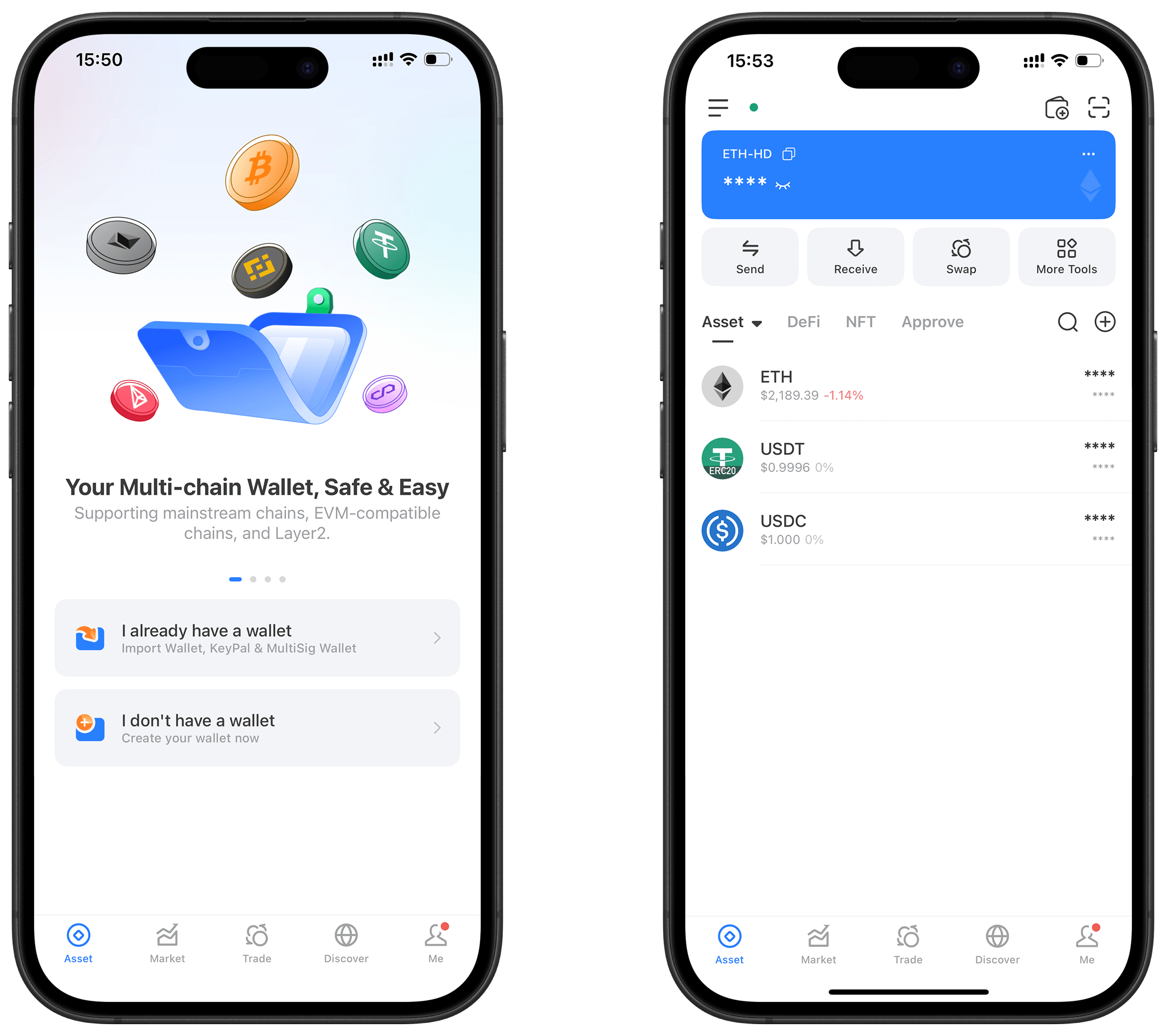
Tips tentang cara membuat dompet:
Klik tautan di bawah untuk mengetahui lebih detail tentangnya cara membuat dompet dengan TokenPocket
2.Temukan Bagian DApps dan Earn
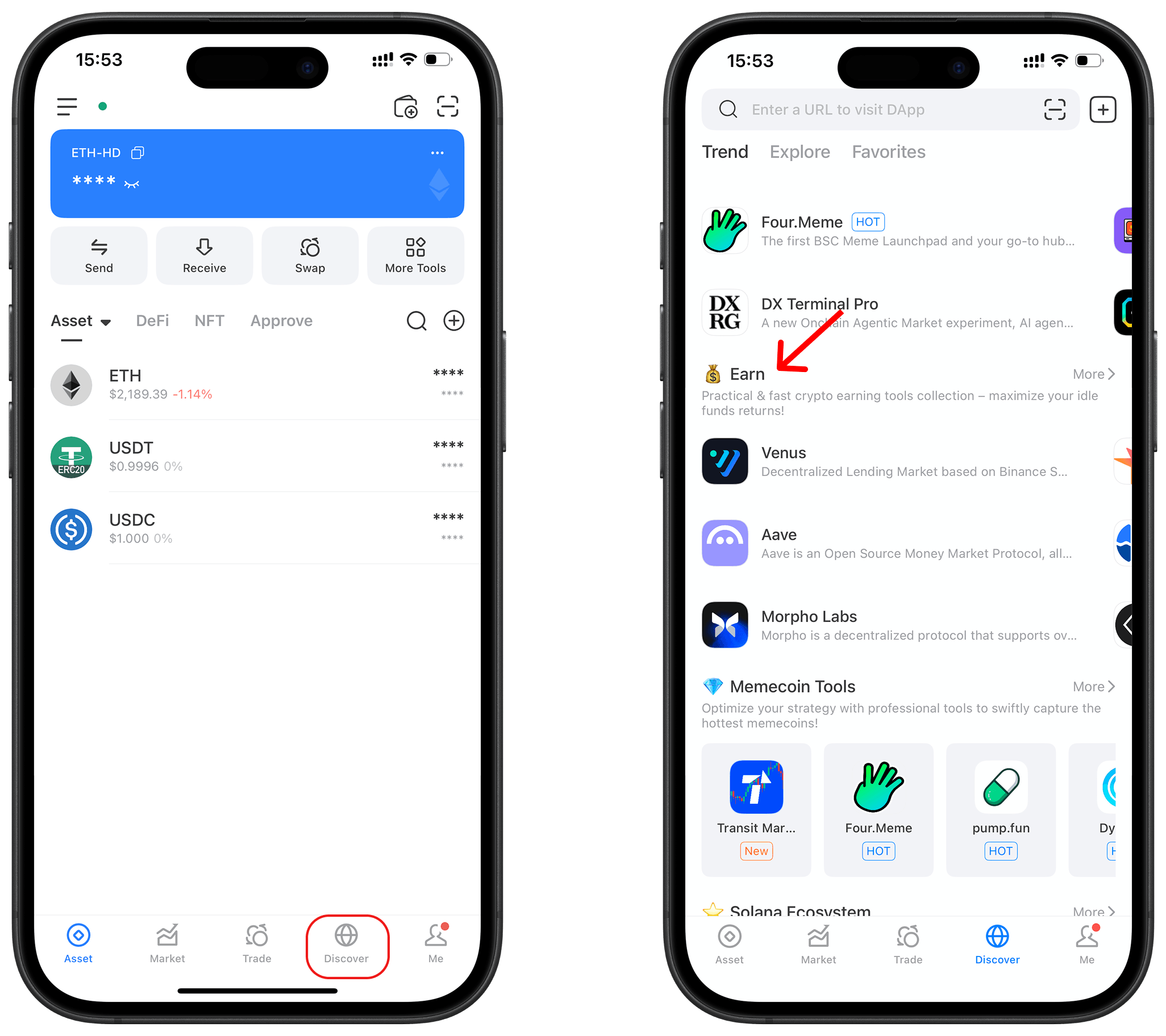
Setelah membuat dompet Anda, ketuk "Temukan" di pojok kanan bawah. Anda akan memasuki bagian DApps tempat Anda dapat mencari aplikasi. Anda juga dapat dengan cepat menemukan DApps melalui bagian "Earn" kami.
3.Masukkan DeFi DApp
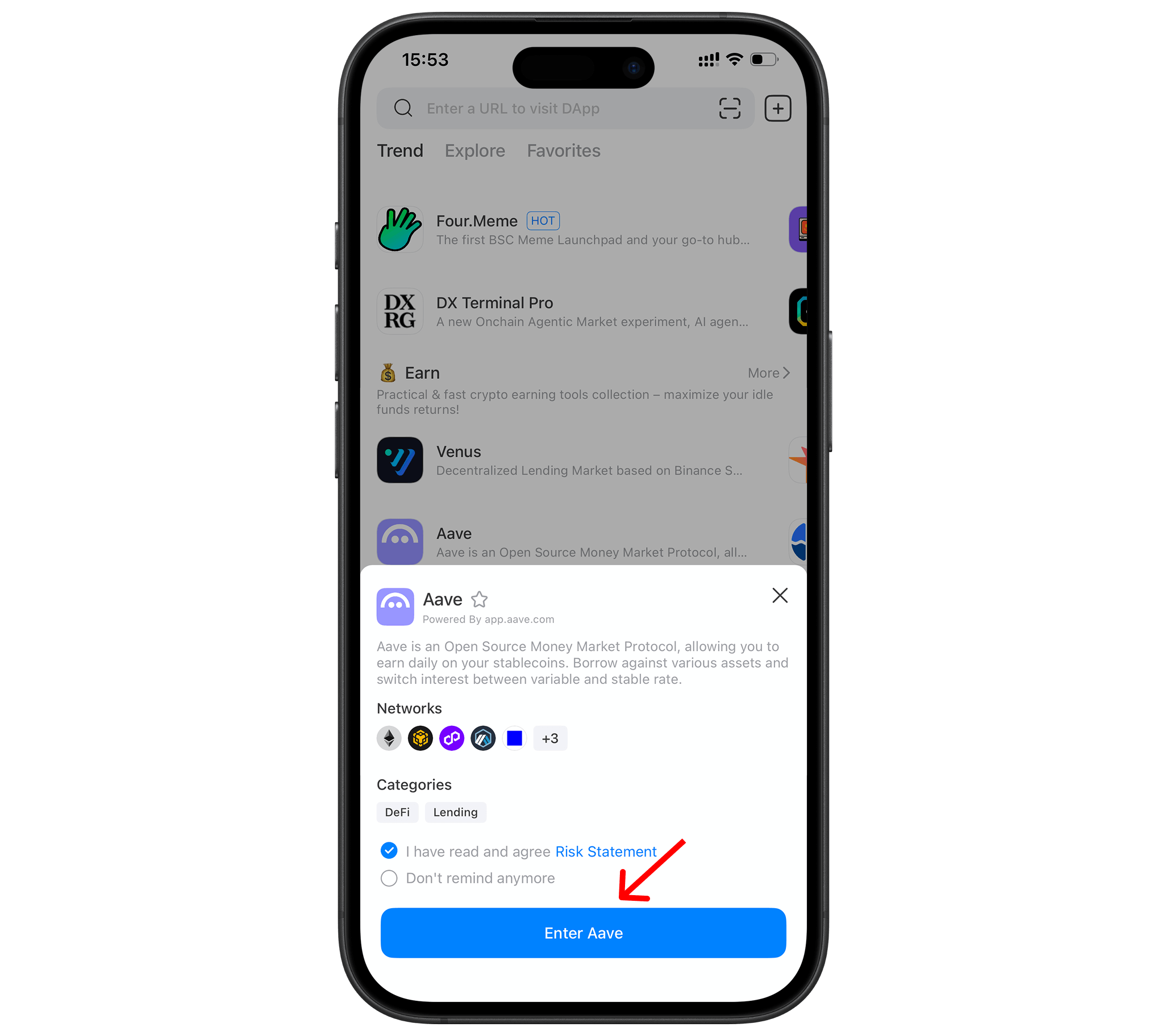
Klik pada DeFi dApp yang ingin Anda akses. Setelah Anda masuk, Anda dapat melakukan interaksi dengan satu klik tanpa perlu mengunduh dApp tertentu.
Tip Keamanan
Lindungi frase awal Anda seperti uang tunai. Pertimbangkan dompet perangkat keras(Keypal) untuk jumlah yang lebih besar.
FAQ tentang DeFi
1.Apa itu TradFi?
TradFi adalah singkatan dari Keuangan Tradisional. Ini mengacu pada sistem keuangan konvensional yang mencakup bank, bursa saham, perusahaan asuransi, dan lembaga terpusat. Di TradFi, transaksi ditangani oleh perantara, memerlukan dokumen, KYC, dan sering kali hanya beroperasi selama jam kerja. Hal ini diatur dan relatif stabil namun lambat, mahal, dan kurang dapat diakses secara global.
2.Apa yang dimaksud dengan platform DeFi?
Platform DeFi adalah aplikasi terdesentralisasi (dApp) yang dibangun di atas teknologi blockchain yang menyediakan layanan keuangan seperti peminjaman, peminjaman, perdagangan, dan perolehan hasil tanpa perantara. Ini berjalan pada kontrak pintar, memungkinkan pengguna untuk berinteraksi langsung melalui dompet non-penahanan. Contoh populernya termasuk protokol peminjaman dan pertukaran terdesentralisasi (DEX). Platform DeFi terbuka, transparan, dan tersedia 24/7 bagi siapa saja yang memiliki koneksi internet.
3. Apa itu Aave di DeFi?
Aave adalah salah satu protokol peminjaman dan peminjaman terbesar dan terpopuler di DeFi. Dibangun di atas banyak blockchain, ini memungkinkan pengguna untuk memasok aset kripto untuk mendapatkan bunga atau meminjam dengan jaminan tanpa pemeriksaan kredit. Fitur utama termasuk pinjaman kilat, dukungan banyak aset, dan likuiditas tinggi. Aave dikenal karena keamanan, transparansi, dan inovasi berkelanjutannya di bidang keuangan terdesentralisasi.
Kesimpulan
Apa itu DeFi? Ini adalah sistem keuangan terbuka dan transparan yang didukung oleh blockchain dan kontrak pintar yang memberi pengguna kendali langsung dan peluang global. Dibandingkan dengan TradFi, DeFi memberikan kedaulatan dan inovasi yang lebih besar. Banyak pengguna menggabungkan keduanya.
Unduh TokenPocket sekarang untuk menjelajahi dunia DeFi hanya dengan satu klik!
Penafian
Berinvestasi dan menggunakan mata uang kripto melibatkan risiko pasar, hukum, dan teknis. Lanjutkan dengan hati-hati. Selalu jaga keamanan frasa mnemonik dan kunci pribadi Anda dan jangan pernah membaginya dengan siapa pun. Artikel ini hanya untuk tujuan informasi dan bukan merupakan nasihat investasi. Sebelum menggunakan dompet apa pun, lakukan riset sendiri dan pastikan kepatuhan terhadap hukum dan peraturan setempat.
Artikel Terkait