Multisig Wallet Scams and Prevention Tutorial
What is Multisig Wallet Scam? 8 Effective Ways to Quickly Identify and Avoid Multisig Scams!
Cryptocurrency investment is becoming increasingly popular, but so are the scams that come with it. Among them, multisig scams — also known as Tron multisig scam or Tron wallet multisig scam — are particularly rampant on the Tron (TRON) chain and have become a "silent killer" causing significant asset losses for many users. This scam exploits the legitimate features of multisig wallets and multisignature mechanisms, allowing victims to see real balances in their wallets while being unable to withdraw funds — ultimately even losing the gas fees they add.
This article systematically explains what is multisig, the working principle of multisig wallets, common scam tactics, practical prevention methods, and answers the most frequently asked questions to help you avoid this "too good to be true" trap.
Part 1: How Multisig Wallets Work
A multisig wallet is a type of wallet designed to enhance security. If you are asking what is multisig, the simplest answer is that unlike regular single-signature wallets (which require only one private key or mnemonic to transfer funds), multisig wallets require multiple private keys to jointly sign a transaction before it can be executed.
Core Concept: M-of-N Model
- N: Total number of private keys owned.
- M: Minimum number of signatures required to complete a transaction (threshold).
- Common setups: 2-of-3 (at least 2 out of 3 keys required), 3-of-5, etc.
On the Tron network, the multisig mechanism is more flexible:
- Accounts have Owner Permission (highest level, can modify account structure) and Active Permission (used for daily operations such as transfers and contract interactions).
- Each permission can be configured with multiple addresses, weights, and thresholds. For example, setting the threshold to 2 with two addresses means both addresses must sign for a transaction to go through.
Legitimate Use Cases:
- Team fund management: Multiple people jointly control company funds to prevent misuse by any single individual.
- Personal security upgrade: One key stored in a hardware wallet, one in a safe, and one given to family as backup.
- Corporate custody: Large transactions require multi-party approval.
The transaction process generally involves: creating a transaction proposal → multiple signers signing in sequence → broadcasting to the blockchain once the threshold is met. It works like a joint bank account that requires multiple people to be present to withdraw money.
Multisig was originally a security tool, but scammers have reversed its use to create "funds can be received, but cannot be withdrawn" traps in Tron wallet multisig scam.
Part 2: Common Types of Multisig Scams
According to real scam cases and security reports, multisig scams can be fundamentally divided into two core types: Complete Mnemonic/Private Key Leakage and Permission Modification Only. The former relies on obtaining full credentials, while the latter achieves permission changes by tricking users into signing malicious transactions.
1. Complete Mnemonic/Private Key Leakage
Scammers must first obtain the victim’s full mnemonic phrase or private key to directly control the account, modify permissions, or transfer funds. This is the most basic entry point for Tron multisig scam. In on-chain transfers, the initiating address and the actual transferring address are usually the same.
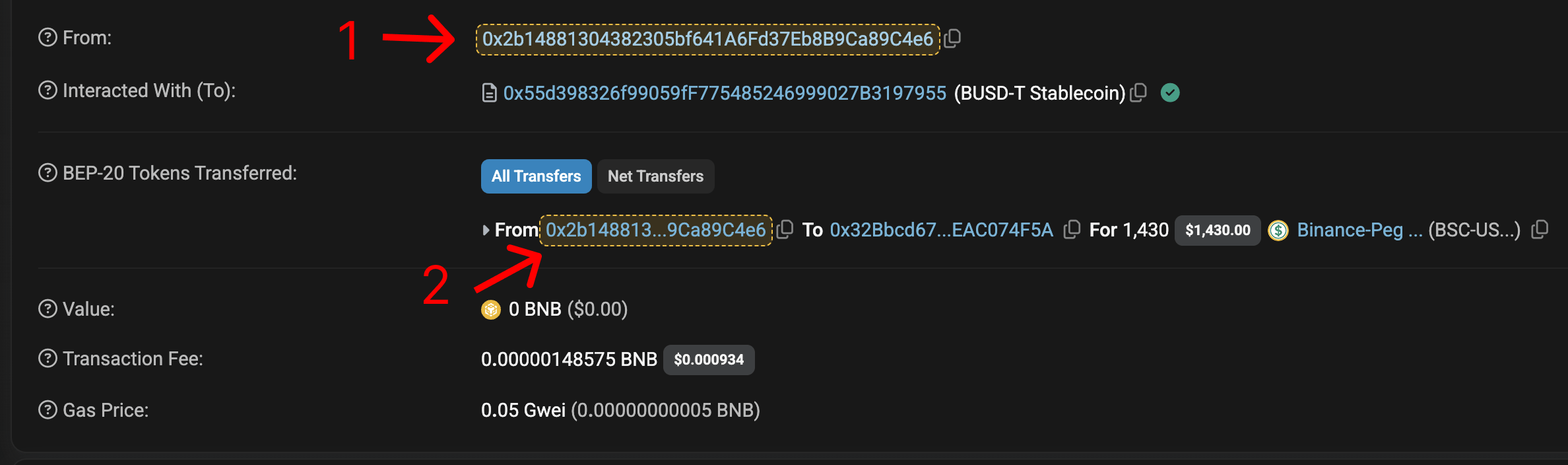
Common Tactics:
- Stranger Sharing Bait Wallet (Windfall / Help Request Scam): Scammers publicly share a pre-configured multisig wallet’s mnemonic on Telegram, Twitter/X, YouTube comments, etc., claiming “I don’t know how to operate it, there’s USDT inside, I’ll share some with you” or “Help me withdraw”. Victims import the mnemonic, see a real balance, but cannot withdraw. They are then tricked into sending TRX as gas fees. The scammer controls other keys and immediately sweeps the funds.
- Social Engineering Inducement: Scammers pose as customer support, investment partners, or new users and trick victims into voluntarily sharing their mnemonic through private messages or group chats (often using promises of high returns or airdrops).
- Fake Wallet App / Malware: Victims download fake wallet apps via ads or suspicious links. The mnemonic is leaked during wallet recovery or operation. Once stolen, scammers can remotely monitor and modify permissions.
- Phishing Websites / Fake Recharge Platforms: Fake sites promoting “low-fee top-up” or “high cashback” trick users into entering their mnemonic to restore the wallet, resulting in credential leakage.
Characteristics
Victims usually perform obvious “active actions”. Once the mnemonic is leaked, scammers can easily convert the account into multisig (e.g., 2-of-3 with themselves holding higher weight), enabling long-term locking or direct theft.
2. Permission Modification Only
Scammers do not necessarily need the full mnemonic. Instead, they trick victims into signing a malicious permission update transaction, directly changing permissions and turning a single-signature wallet into multisig or transferring Owner permission. In such on-chain transfers, the initiating address and actual transferring address are usually different.
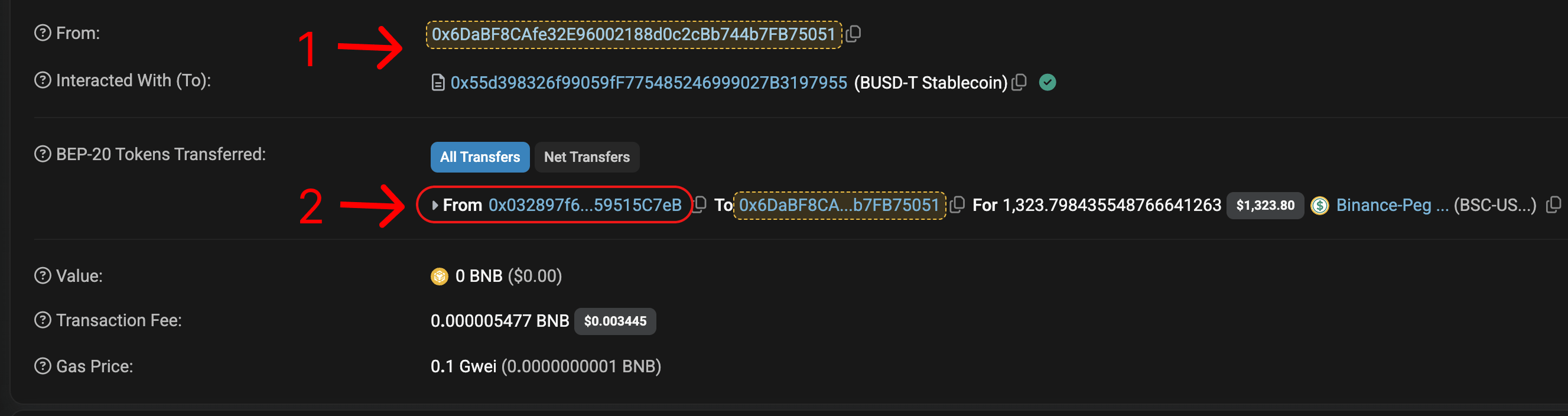
Common Tactics:
- Malicious Links / Blind Signing / Permission Upgrade Scam: Scammers provide fake recharge sites, voucher purchase links, or “security upgrade” links. After clicking, the wallet prompts a transaction (often disguised as a normal transfer or authorization), which is actually an “Update Account Permission” contract. Once the user confirms (sometimes only needing a password), permissions are modified — adding the scammer’s address, increasing the threshold, or transferring Owner permission.
- “Security Upgrade” or Fake Customer Support: Scammers pose as support staff claiming to “help upgrade multisig protection” or “optimize account security”, tricking users into clicking links and signing permission change transactions.
- Secondary Scam / “Unlock Memo” Scam (Rising Trend): After locking the wallet, scammers send a small amount of USDT/TRX with a memo saying “Company has enabled multisig, contact TG:xxxx to unlock”. Victims who reach out are then tricked into further signatures or paying “unlock fees”.
Characteristics:
The process may not involve entering a mnemonic — only confirming a signature in the wallet. Transaction details often hide “UpdateAccountPermission”. After modification, the wallet becomes “funds in, no funds out”, allowing scammers to fish for a long time or conduct secondary scams.
Part 3: Prevention Methods
The core of multisig scams is “social engineering + permission manipulation”. The key to prevention is never being greedy + regular checking.
Practical Prevention Steps:
- Never use mnemonics or private keys shared by strangers: Any “share wallet for help” request is 99% a scam.
- Protect core information: Treat your mnemonic and private keys as top secrets. Never share them with anyone (including so-called support or friends). Use hardware wallets for offline storage.
- Download wallets only from official sources: Download TokenPocket or other official wallets only from official websites or legitimate app stores. Avoid Baidu searches or third-party links.
- Regularly check account permissions:
- Enter your address on a blockchain explorer and check Owner and Active permissions.
- If unknown addresses or abnormal thresholds are found, stop using the address immediately and transfer assets to a new wallet.
- Small-amount testing: Before large transactions, test with a small amount to ensure transfers work normally.
- Enable extra security: Use hardware wallets with official apps, enable 2FA, and avoid clicking suspicious links.
- Stay alert to social engineering: Block any stranger’s private messages, screen-sharing requests, or demands for your mnemonic.
- What to do if scammed: Do not believe “unlock experts” or secondary scams. Transfer any receivable assets to a new address immediately and report to the platform or police.
Remember Legitimate wallet official teams will **never** proactively ask for your mnemonic or private keys.
FAQ about Multisig scam
Q1: Why can’t I withdraw funds even if I have the mnemonic/private key?
A: Because the wallet has been set to multisig, requiring multiple keys to sign. The scammer controls one or more keys, so you cannot complete the transaction alone.
Q2: Can I remove multisig by myself?
A: If you still control the Owner permission, you can adjust the threshold or remove unknown addresses to restore single-signature. However, if Owner permission has been transferred, it is usually impossible to remove it yourself.
Q3: If I see a balance in the wallet, can it still be saved?
A: The bait balance is usually controlled by the scammer. Sending gas fees will only increase your losses. Stop all operations immediately and create a new wallet to transfer your other assets.
Q4: How to withdraw from multisig wallet?
If the wallet has been set to multisig and the scammer controls one of the keys, you usually cannot withdraw funds yourself. It is recommended to stop using the address immediately, create a new wallet to transfer your other assets, and abandon the multisig address.
Q5: What is multisig? Is multisig safe?
Multisig itself is a safe tool for team or personal asset protection. However, in scam scenarios, it is often weaponized to create “funds in, no funds out” traps. So multisig is safe by design, but extremely dangerous when misused or tricked into setting up.
Conclusion
Multisig scams exploit users’ blind spots in blockchain security, turning a tool meant to protect assets into a tool for theft. Greed is the biggest vulnerability — there is no free lunch, especially in the crypto world.
The best way to protect your assets is: learn basic knowledge + develop good habits + stay vigilant. Regularly checking permissions, using official tools, and not trusting strangers can significantly reduce risks.
Cryptocurrency investment carries risks — security comes first. We hope this article helps you avoid Tron wallet multisig scam and explore the blockchain world safely. If you have a specific wallet address or operational questions, it is recommended to check directly on TronScan or consult official support channels.
Disclaimer
Investing in and using cryptocurrencies involves market, legal, and technical risks. Proceed with caution. Always keep your mnemonic phrase and private keys secure and never share them with anyone. This article is for informational purposes only and does not constitute investment advice. Before using any wallet, do your own research and ensure compliance with local laws and regulations.
Related Articles